How to Choose an Aluminum Pool Fence That Meets Oklahoma ASTM Codes (and Survives OKC Summers)
If you’ve got a pool in Oklahoma, the fence around it isn’t optional and it isn’t decorative...it’s a code-mandated barrier that has to keep kids and animals out, hold up to 70+ mph straight-line winds, and not warp the first time July hits 105°F. That’s a tall order, and it’s why aluminum has become the go-to material for pool enclosures from Edmond down to Norman.
But not all aluminum pool fencing is created equal. There’s a big gap between the lightweight residential panels you’ll find in a big-box store and a properly engineered system that meets ASTM F2286 and the BOCA pool barrier code your local inspector is going to reference. Here’s what actually matters when you’re picking one out.
What the Code Actually Requires
Before you pick a style or a color, understand what your fence has to do. The City of Oklahoma City, along with most surrounding jurisdictions including Moore, Yukon, and Mustang, enforces pool barrier requirements that line up with the International Residential Code (IRC) Appendix G and reference ASTM F2286 for fence performance.
The big rules:
Minimum height of 48 inches measured from the outside grade. Some municipalities push that to 60 inches for commercial properties.
No more than 4 inches between the bottom of the fence and the ground (2 inches if the surface beneath is non-solid, like grass or mulch).
Vertical pickets spaced no more than 1¾ inches apart so a small child can’t squeeze through.
Top horizontal rails at least 45 inches apart when pickets run vertically — this prevents a kid from using rails as a ladder.
Self-closing, self-latching gates with the latch mechanism at least 54 inches off the ground.
If your fence doesn’t hit every one of those marks, the inspector will fail it, your insurance carrier will flag it, and your Certificate of Occupancy can stall.
Why Aluminum Wins in Oklahoma
We install Wood Fencing, Vinyl Fencing, and chain link every week, and they all have their place. But around a pool, in this climate, aluminum is hard to beat.
It won’t rust. Powder-coated aluminum doesn’t pit or corrode the way steel does, even with chlorine splash and pool-deck overspray. We’ve pulled 30-year-old aluminum panels off pools in Bethany that looked nearly new under the coating.
It handles the heat-freeze cycle. Oklahoma swings from 110°F in August to single digits in January. Vinyl gets brittle in the cold. Wood swells, splits, and rots. Aluminum holds its shape.
It survives wind. Properly engineered aluminum pool fence panels, set in concrete footings below our 24-inch frost line, ride out the kind of wind events we see every spring without panel failure. The open-picket design also lets wind pass through instead of acting like a sail — a major reason solid privacy fences around pools tend to lean or blow out during Oklahoma storms.
It meets code out of the box. Most quality aluminum pool fence systems are pre-engineered to ASTM F2286 spacing and BOCA barrier requirements. You’re not trying to retrofit compliance into a fence that was designed for a flower bed.
Grades of Aluminum Pool Fence — and What to Actually Buy
This is where homeowners get burned. “Aluminum fence” can mean a lot of things.
Residential Grade
Lighter wall thickness (usually .055"-.062"), thinner pickets, smaller posts. Fine for a decorative yard fence. Not what you want around a pool in central Oklahoma. The first hailstorm or a kid leaning hard on a panel will tell you why.
Commercial Grade
Heavier wall thickness (.072" or better), 1" or larger pickets, 2" or 2.5" posts. This is the sweet spot for residential pool fencing in the OKC metro. It meets ASTM, handles wind, and won’t dent if a deck chair gets thrown into it during a thunderstorm.
Industrial Grade
Overkill for most backyards but the right call for HOA community pools, apartment complexes, and commercial properties. If you’re managing a property in Midwest City or Del City with a shared pool, this is what your insurer will want to see. We handle a lot of these jobs through our Commercial Fencing division.
Post Setting — Where Most Installs Fail
You can put up the best aluminum pool fence on the market and it’ll still fail in five years if the posts aren’t set right. This is the part DIYers and low-bid installers get wrong constantly.
Oklahoma’s red clay soil is brutal. It expands when wet, shrinks and cracks when dry, and that movement will heave a shallow post right out of the ground. Around Arcadia and Piedmont especially, we run into clay-heavy soil that demands real footings.
Here’s what we do:
Dig to 24 inches minimum — below the frost line and deep enough to anchor against wind load and soil movement.
8-inch diameter footings for standard residential pool fence posts, larger for gate posts.
Concrete poured around the post, crowned at the top so water sheds away from the metal.
Posts plumbed and braced until the concrete sets — not just eyeballed and walked away from.
A shortcut here will cost you the entire fence within a few seasons.
Gates — The Most Common Code Failure
Nine out of ten pool fence inspection failures we see come down to the gate. Either it doesn’t self-close, the latch sits too low, or the hinges sag after a season and the gate stops latching reliably.
Spec a gate with:
Magnetic self-latching mechanism mounted on the pool side, 54+ inches off the ground
Tension-adjustable self-closing hinges (Magna-Latch and TruClose are the industry standards)
Heavier gate posts — 3" minimum, set deeper than line posts
Opening away from the pool, per code
If you’ve got an older pool fence in Norman or Moore that’s been there 10+ years, there’s a good chance the gate hardware is out of compliance with current code even if it was legal when it was installed.
Color, Style, and the Heat Question
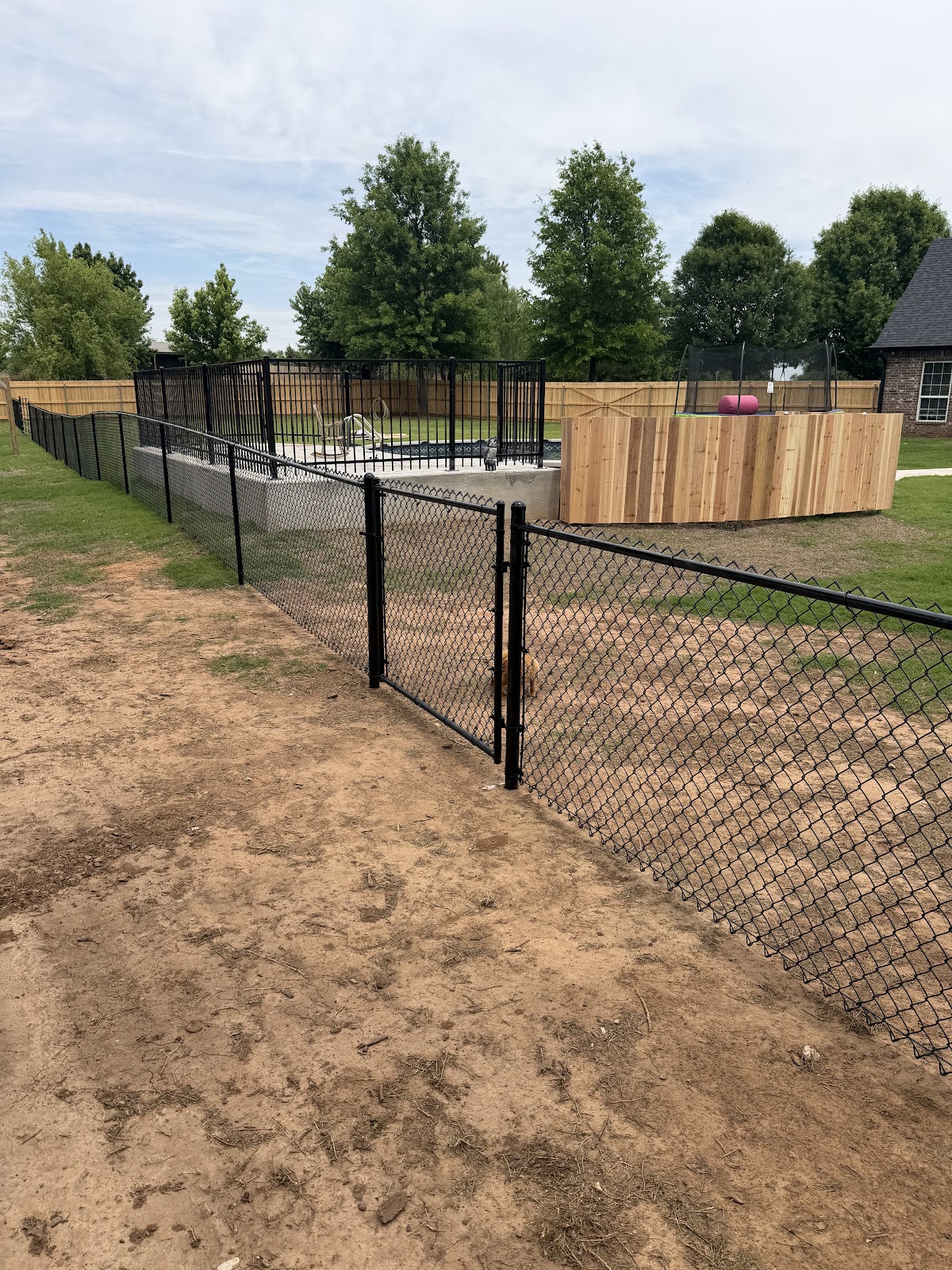
Black is the most popular color we install — it looks sharp against blue water and disappears visually so you see the landscape, not the fence. But yes, black aluminum gets hot in the Oklahoma sun. Hot enough that a barefoot kid grabbing the top rail in August is going to notice.
Bronze and matte black with textured powder coats reflect more heat than gloss black. Cream and white run cooler still. If you’ve got young kids, factor that in.
For picket style, flat-top is the most common for residential. Spear-top or pressed-spear adds curb appeal and an extra deterrent for climbing, which is why we install a lot of it on properties around Edmond and Yukon.
What It Won’t Replace
An aluminum pool fence is a barrier — not a privacy screen. If you want both pool code compliance and privacy, you’ll typically need a perimeter privacy fence (vinyl or wood) plus an inner aluminum pool fence around the water itself. That’s also the configuration most insurance carriers prefer for liability.
And if you’ve got livestock on the same property — common on acreages around Piedmont and Arcadia — keep your pool barrier separate from your pasture fencing. Pool fence isn’t Agricultural Fencing, and ranch rail isn’t pool fence.
Get It Done Right the First Time
A pool fence is one of those projects where the cost of doing it twice is brutal — permits, demo, re-inspection, and a season of your pool sitting unusable. We’ve built and repaired pool enclosures across the OKC metro for years, and we know exactly what the inspectors in each jurisdiction are looking for.
If you’re planning a new pool, replacing a failing fence, or trying to bring an older enclosure up to current ASTM code, give Fence Craft a call. We’ll walk your property, talk through your options, and give you a straight, written estimate — no fluff, no upsell. Built Right. Built to Last. Request your free estimate today.