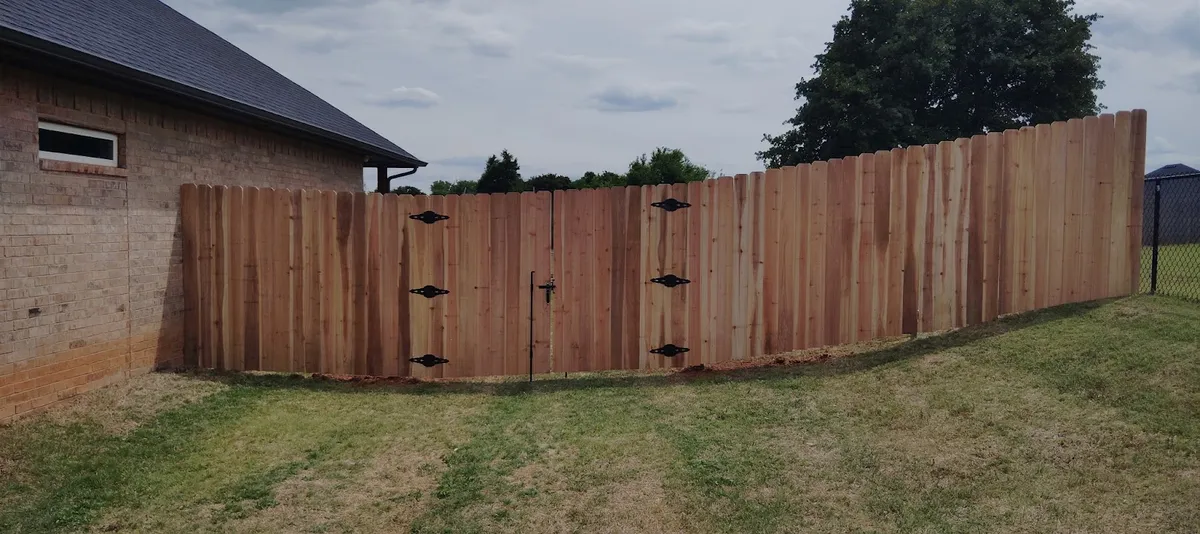
Wood Fence Repair in the OKC Metro: Storm Damage & Rot
Wood Fence Repair in the OKC Metro: Storm Damage, Rot, and Leaning Posts
If your wood fence has storm-racked panels, a post leaning out of line, or boards that feel soft near the ground, here is the direct answer: most of that damage can be repaired when it is caught early and stays limited to a few posts or boards. Rot that has spread through several posts underground, or a fence line that has drifted out of plumb across many sections, points toward more extensive work. The sections below walk through how to tell which kind of problem you are actually looking at: storm damage, rot, or leaning posts, and what each one usually means for your fence.
Storm Damage: Racked Panels and Blown-Out Boards
Wood fences take a direct hit during OKC metro storm season. Straight-line winds can rack an entire panel sideways without knocking it down, twist individual pickets loose from the rails, or drive debris hard enough into the face of the fence to crack or split a board. A few signs that point to storm damage specifically, rather than age or rot:
- A section that suddenly leans or bows right after a windstorm, while the rest of the fence line still looks straight
- Pickets that have popped loose from the rails but are not cracked or rotted themselves
- Cracked or split boards concentrated in one area, especially the side that faced the storm
- Nails or fasteners pulled partway out after a panel flexed under wind load
When the damage is limited to a section or two and the rest of the fence line is still solid, that section is usually a straightforward repair rather than a sign the whole fence needs to come down.
Wood Rot: Where It Starts and How to Spot It Early
Rot almost always starts where the post meets the ground. That ground-contact zone holds moisture longer than any other part of the fence, especially in Oklahoma's red clay soil, which drains slowly and stays damp against a post base after a heavy rain. A post can look fine from a few feet away while the wood right at soil level has already gone soft.
A simple way to check: press a screwdriver or similar tool into the wood at the base of a post, right where it enters the ground. If it sinks in easily or the wood feels spongy rather than solid, rot has already set in at that post. Rot does not stay contained. Left alone, it works its way up the post and can eventually compromise the boards and rails attached to it, which is why catching it at one or two posts is worth doing before it spreads further down the fence line.
Once wood has gone soft and spongy, it does not come back. A repair at that stage means resetting or replacing the specific post or board that failed, not treating the surface and hoping it holds. Catching rot early, while it is still limited to a post or two, is what keeps a repair small instead of turning into a much bigger job.
Leaning or Shifted Posts
A post can lean for more than one reason, and the cause changes what the fix should be. Wind can twist a post hard enough to loosen its concrete footing, even when the post itself is still sound. Saturated soil after heavy rain can soften the ground around a footing enough for a post to shift under its own weight. And a post with rot at the base may simply no longer have a firm anchor to hold it upright at all.
If only one or two posts have moved and the panels between them are still intact, that is usually a targeted repair, resetting the post in fresh concrete rather than pushing a loosened post back into its old, compromised footing. If most of the fence line is out of plumb, that points to a more widespread problem that a single post reset will not solve.
Warped, Split, and Cupped Boards
Wood boards move with the weather. Oklahoma's swings between soaking rain and dry heat can cause a board to cup or bow as one face absorbs moisture faster than the other. Age and UV exposure make boards more prone to splitting outright, sometimes from nothing more than normal wind load on an already-weathered board. A handful of warped or split boards scattered across an otherwise solid fence is typically a board-by-board repair. Boards that are uniformly gray, cracking, and cupped across most of the fence line usually mean the wood has simply reached the end of its useful life.
Why Oklahoma Weather Is Hard on Wood Fences
01. Wide Temperature Swings
Hot Oklahoma summers followed by winters below the freeze line make wood expand and contract season after season, which loosens fasteners and stresses joints over time.
02. Red Clay Soil Movement
Clay-heavy soil expands when wet and contracts when dry, and that constant movement works at post footings year after year.
03. Straight-Line Wind and Storm Systems
OKC metro storms load fence panels sideways all at once, which is a different kind of stress than the slow wear from sun and moisture.
Frequently Asked Questions
Can a wood fence be repaired instead of replaced?
Often, yes. When the damage is limited to a handful of posts or boards and the rest of the fence line is still straight and solid, a targeted repair usually makes sense. Once rot or storm damage has spread across most of the fence, replacement tends to be the more practical option.
How do I tell if a fence post is rotted at the base?
Check the wood right where the post meets the ground. Press a screwdriver or similar tool into it. If the wood feels spongy or the tool sinks in easily, rot has set in at that post, even if the post looks fine above ground.
What causes a wood fence to lean after a storm?
Wind can loosen a post's concrete footing even when the post itself is undamaged, and saturated soil after heavy rain can soften the ground enough for a post to shift. Rot at the base of a post can also leave it without a firm anchor.
How much does wood fence repair cost?
Cost depends on how many posts or boards are affected and what caused the damage, so there is not a single number that fits every fence. The most reliable way to get an accurate answer for your specific fence is a free, in-person estimate.
What should I look for when hiring a fence repair company?
Look for a company that will inspect the fence in person before quoting anything, explains clearly whether the issue is isolated or more widespread, and is upfront about what a repair can and cannot fix. A straight answer about repair versus replacement is worth more than a fast quote over the phone.
Does Fence Craft repair wood fences in Edmond, Norman, and other OKC metro cities?
Yes. Fence repair is a service we offer across the Oklahoma City metro, including Edmond, Norman, Moore, Yukon, Mustang, Midwest City, Del City, and Bethany.
Serving Homeowners Across the OKC Metro
We repair and install wood fencing for homeowners across the Oklahoma City metro, including Mustang, Yukon, Midwest City, Edmond, Norman, Moore, Del City, and Bethany. If you are not sure whether your fence needs a repair or a closer look, an in-person inspection is the fastest way to know for certain. You can see more about our wood fence options on our wood fence page.
Storm damage, rot, and leaning posts are three different problems that can look similar from a distance, but each one points to a different fix. Catching any of them early, while the damage is still limited to a post or a board or two, is what keeps a repair small. If you are looking at a section of fence and are not sure what you are dealing with, request a free estimate and we will give you a straight answer in person.